
Filipino culture vs American culture, for an American man and a Filipina, points to five everyday things to talk about: how close her family is, how time works, how money is kept, how a no gets said, and how faith shows up in the day. Each is a matter of degree, our evidence on some is thin, and your two families decide how much applies.
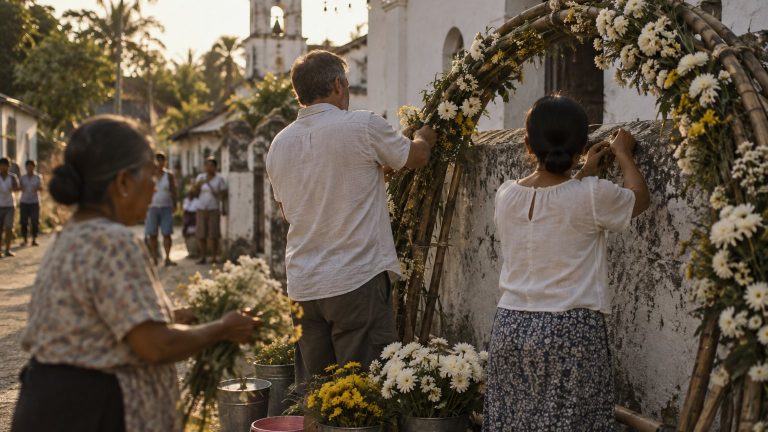 Filipino CultureFlores de Mayo: What Happens at Her Town’s Santacruzan25 min read
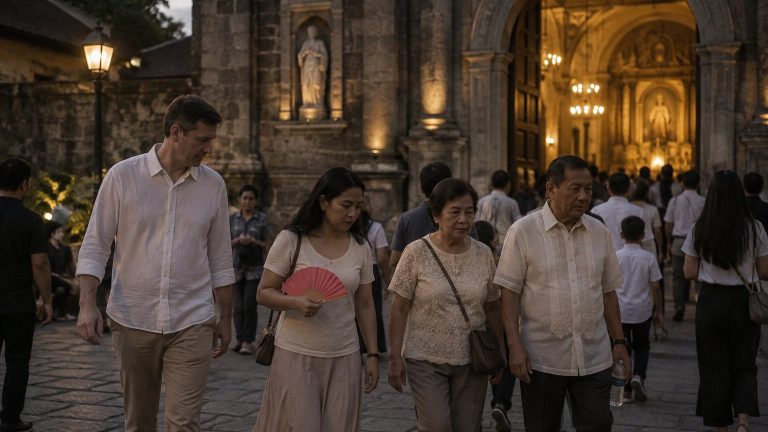 Filipino CultureHoly Week in the Philippines: Traditions With Her Family26 min read
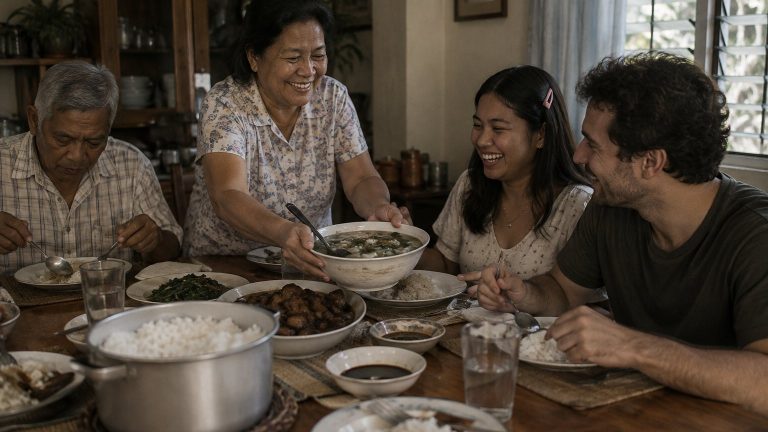 Filipino CultureFilipino Food Traditions: Eating With Her Family27 min read
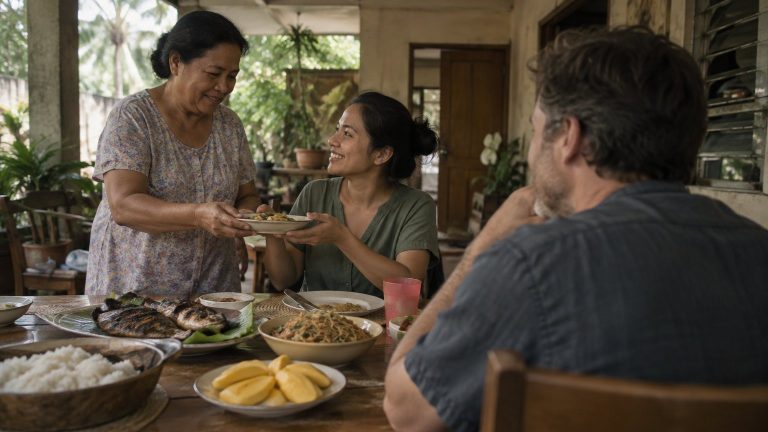 Filipino CultureUtang na Loob: The Debt of Gratitude in Her Family25 min read
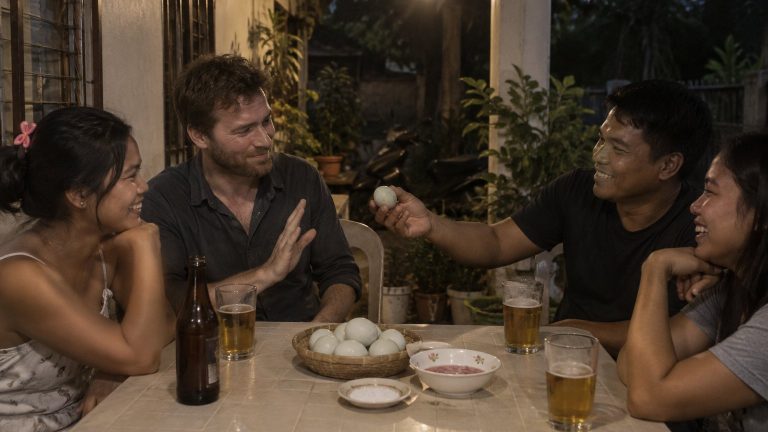 Filipino CultureWhat Is Balut? Eating It With Her Family24 min read
Contents · 9 sections
For an American man and a Filipina, Filipino culture vs American culture points to five everyday things to talk about: how close her family is, how time works, how money is kept, how a no gets said, and how faith shows up. Each is a matter of degree, so treat it as a question for her, not a fact.
Filipino culture and values in daily life: five things you may notice together
The differences a couple runs into are likely to be smaller and more specific than the ones you’ll read about. You won’t meet “collectivism”. You might meet a mother who calls every day, a dinner that starts later than the invitation said, a question about who pays for a cousin’s school fees, a yes that turns out to mean “I’d rather not”, or grace before every meal. These are situations to talk through, not things to assume about her. Each section below takes one of these: what the sources say, what to ask her about how she sees your side of it, and what helps.
The pages that come up first when you look this up won’t tell you much of that. On 22 October 2026 we read what Google showed in the US for “filipino culture vs american culture” that was readable in full: four web pages and Google’s AI answer above them. Forum threads our source rules bar, and two pages that wouldn’t open, are left out. 3 of the 4 sites are staffing companies writing for American employers who hire Filipino workers, and the fourth is a shop blog about Filipino-American identity. All 5 say family comes first, and 4 say Filipinos answer indirectly. None of the 5 speaks to a couple, none gives a figure for how many Filipino families live this way, and none says it differs from family to family. Google’s AI answer may draw on the same pages, so the 5 aren’t 5 separate views. And most of what they say is about the workplace, not a home. That tells you what these pages repeat, not how people actually live.