
 MarriageMeeting Your Thai Girlfriend’s Parents: What to Expect22 min read
 MarriageHow to raise a mixed-race child in Thailand24 min read
 MarriageFinding a Wife in Thailand: Meeting, Courting and Marrying32 min read
 MarriageThai Girlfriend Problems and the Silent Treatment26 min read
 Relationship SkillsHow to Build Trust in a New Relationship With a Thai Woman21 min read
Contents · 10 sections
Are you presently involved in a cross-cultural relationship? Do you want to tie the knot with your beloved and raise a family of your own? Congratulations, for having the courage to embark on this challenging and noble journey. But before you do that, you have to learn the effects and problems that you could encounter in these types of relationships.
Studies revealed that cross-cultural relationships entail a myriad of problems that include social, physical and relationship issues. These can cause considerable stress on the couples and families of people in this type of relationship. However, take heart; these problems have solutions that you can effectively implement.
Cross-Cultural Relationship Problems in Marriages
Asia has one of the rapidly growing numbers of interracial marriages around the globe. This can be attributed to the fact that the Internet has paved the way for easy communication and interaction between different countries. Communication is no longer a problem because of online translators.
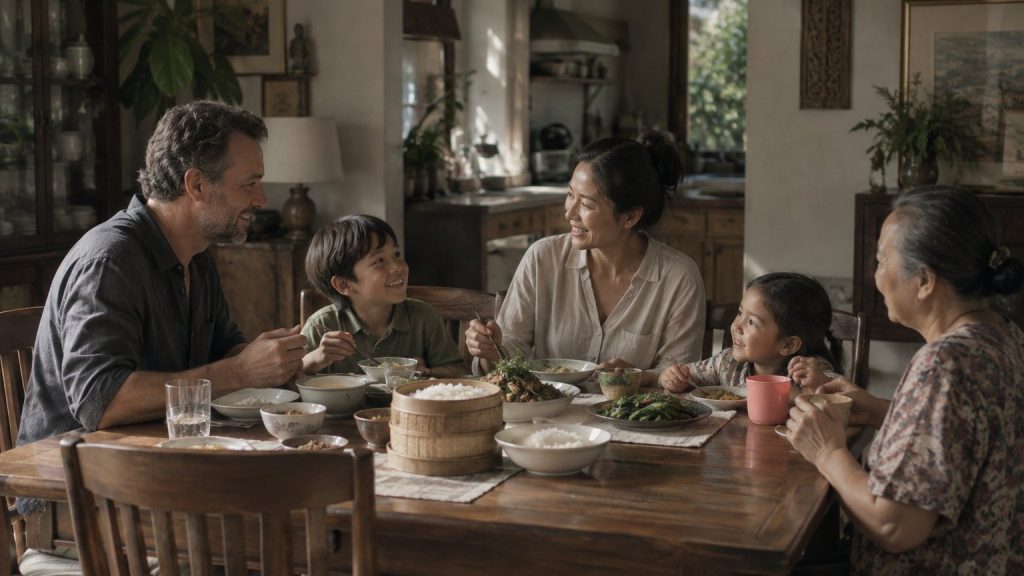
Indeed, cross cultural relationships have become easier, with a number of relationships that ending in marriage. Nonetheless, after marriage, problems that sometimes aren’t recognized previously would then slowly appear in the equation and become magnified after the honeymoon period is over. According to the U.S. Bureau of Census the percentage of Asian American interracial marriages will rise to 11% of the U.S. population in 2050. There’s also a dramatic increase each year of Black and White intermarriages as reported by PEW.
Thus, mixed marriages and the resulting problems are one of the growing concerns of society. Intercultural marriages have existed for decades now and continue to rise in numbers; likewise, with Europeans and other races.
Here are some of these problems and the recommended solutions.
Identity crises
The problem of identity often occurs in children and couples of cross-cultural marriages. Often, the children are left in a quandary as to what country they belong to. There are reported cases of Asian-American kids being uncomfortable and being discriminated in school because of their mixed cultural background. Understandably, even their physical appearance would look unique.
Not many kids are aware that they should be proud of their ethnicity. They go through life feeling miserable and left out, simply, because their skin and hair are colored differently.
During these crucial times, the guidance of parents and family are of utmost importance. Depending on the parent’s outlook in life, the child could become a proud or miserable individual.
Not only do the children have identity crisis, a significant number of couples have their own identity problems too. The question between couples is whether to surrender their national identity or not; and which culture should be observed at home. These will always lurk in the background. What cultural practices should be imposed in the household? Will each of the couple be willing to be tolerant of each other’s national identity and fundamental differences to reach a compromise? How can this problem be solved?
Professor Kim Halford and his team of researchers from the University of Queensland had come to the conclusion that many culturally diverse couples can have “satisfying relationships”. The couples in their study have learned how to perceive things using their partner’s perspectives. The research project, called “Loving Diversity” is presently ongoing.
In this program, couples coming from diverse backgrounds are invited to join. If they pass the screening phase, they will become active participants. They would then provide some answers to questions about interracial marriages, such as how the couples communicate and accommodate each other. Majority of the participants of the program are Chinese Western couples.
According to Professor Halford, couples from diverse cultures must be willing to:
Talk about their problems
Dialogue is important in any relationship, more so, with married couples coming from different cultures. Western men are more open and would call a spade, a spade; however, Asian women are sometimes unable to speak candidly. A typical example is when making love; Western men are usually expressive of what they want, but it takes coaxing for Asian women to come outright with what pleases them.
Couples are advised to talk honestly about the important aspects of their marriage, and come to terms with what is acceptable behavior to both. According to Halford, avoidance of a heart-to-heart talk would eventually erode the relationship.
Hence, if you’re in this type of relationship, take time to sit down and talk to your partner about how to raise your kids, what and how to eat, rules on cleanliness, and guidelines in disciplining your kids. There should be a clear-cut, unified goal for both of you.
Know each other’s cultures
In connection with talking about the vital things as a married couple, they should also strive to learn about each other’s cultures. Not just a shallow understanding of the other’s practices, but a deeper exploration of why these practices are done, and what these mean to each of the couples. The activity must be perceived as a knowledge acquisition to understand each other more.
We can outline a suggested scenario for couples based on Halford’s suggestions with the following steps:
- Get to know each other’s cultures even before the marriage
- Learn what’s taboo for your partner and adjust accordingly
- Compromise in situations where you can
Miscommunication due to culture and language barrier
Because of cultural differences, misunderstandings often occur between spouses, between children and parents, or between the cross-cultural family and other people. Often, culture shock happens and before you know it, the communication gap has lengthened and you can no longer resolve the issue. This can result to divorce.
Based on a study on communication on intercultural marriages conducted by Tiffany G. Renalds, a Masteral student of the Liberty University, couples who truly loved each other experienced “marital satisfaction” in the face of their cultural diversity and communication styles.
Renalds further discovered the following facts about intercultural marriages:
Openness in communication is necessary
Couples should listen to each other’s viewpoint without being hateful and demeaning. In cases when the conflict is too much to handle and emotions are unrestrained, they should walk away momentarily. Spouses could either agree to change his/her beliefs, or accept the other’s views.
There must be a willingness to fulfill the other spouses’ needs before his/her own
In most of the couples in the study, it was evident that the spouses must have the willingness to prioritize the needs of his/her partner. This was possible when the foundation of the couples’ marriages was love.
Respect for each other is essential
The successful couples showed respect for one another by saving face for their spouses. They have disagreed in private and talked about their opinions in the confines of their rooms.
Couples must accept their differences
The researchers found out that there must be acceptance of the differences by letting go of their own biases and expectations.
In this context, we can conclude that expectations play a crucial role in the success of any relationship, be it intercultural or not. When you expect less from your spouse, you won’t get disappointed often; thus, you could live together more happily with fewer conflicts.
Couples must show kindness and understanding
In the study, destructive conflict, such as lack of kindness and understanding had made couples aggravate their ‘fights’. Each had an opinion of his/her own and didn’t want to give in.
This scenario indicates that couples must understand and be kind to one another. Empathizing and putting yourself in your spouse’s shoes can help a lot in understanding him/her.
In