
The Thai wai read from the guest's side: how to wai her parents and grandparents, how high the hands go, who wais first, monks, staff and children, and what 351 forum members say happens when you do.
 CultureChinese New Year in Thailand With Her Thai-Chinese Family27 min read
 CultureThai Food Culture: Eating With Her Family25 min read
 CultureThai Father’s Day: What to Give Her Father19 min read
 CultureValentine’s Day in Thailand: What She May Expect29 min read
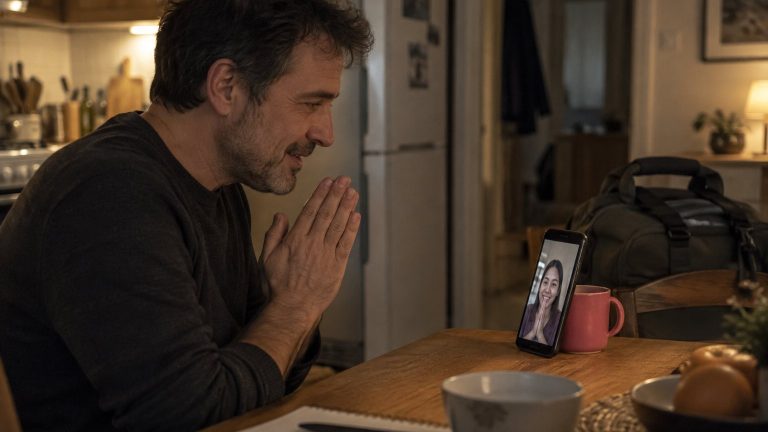 CultureHow to Say Hello in Thai: Greeting Her Family25 min read
Contents · 17 sections
The wai is the Thai greeting: palms pressed together, fingers up, with a slight bow of the head. It says hello, goodbye, thank you and sorry, and it shows respect. In June 2024 the Thai Cabinet listed the wai as a national identity of Thailand.
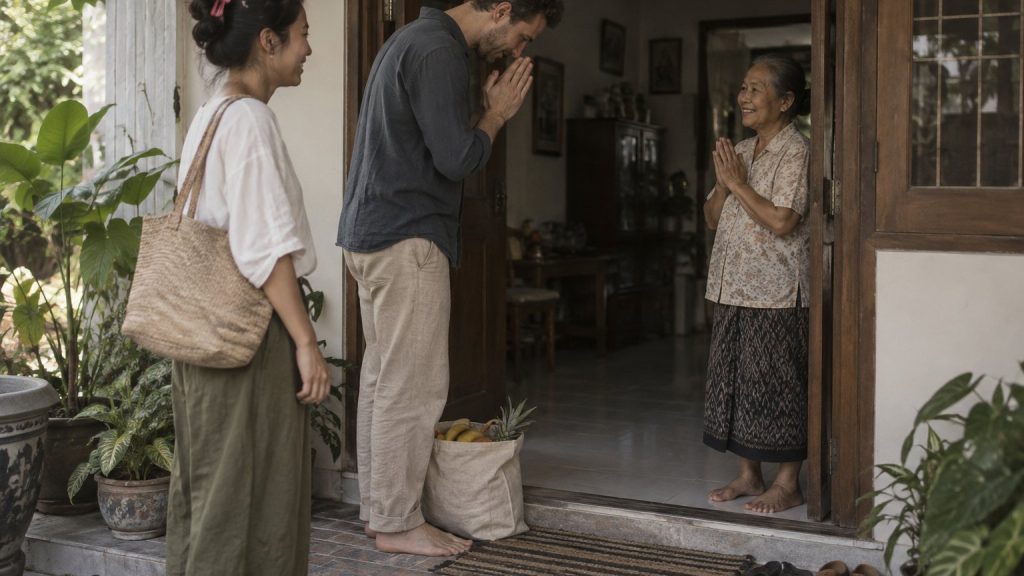
The higher the hands, the more respect: about the chin for friends, the tip of the nose for parents and elders, between the eyebrows for monks. The published guides say the younger or junior person wais first. With her family, offer the first wai to her parents and grandparents when you arrive, since they are usually older than you; if you are close to their age or older, ask her who should go first. A nod, a smile or a word back is a full answer, though some families wai back; take whatever comes as the answer. When shop or hotel staff wai you, answer with a small wai, a nod or a thank you; you need not start one yourself. For the rest, follow her, because age, rank and her family’s own habits decide who wais whom.
The guides we read give the wai as a set of rules for visitors: three heights, a few things never to do. The Pantip threads we read, on a big Thai public forum, ask other questions: who goes first, what an older person does when they are waied, and what to make of a nod. We counted what 351 different forum members wrote (349 on Pantip, 2 on Ask MetaFilter). The numbers are below, set beside the published guides, so you can see which rules hold and which are softer than they sound.
What is the wai in Thailand?
The wai is a gesture of greeting and respect. You put your palms together, fingers close and pointing up, draw your hands toward your face or chest and bow your head slightly. The Cabinet spokesman described it in 2024 as bringing both hands close to the chin, the nose, the middle of the eyebrows or the chest, for juniors, seniors, peers and monks 1.
The Government Public Relations Department reported the decision two days later: the Cabinet approved the wai as a national identity of Thailand in the “greetings and displays of respect” category 2. That is a cultural designation, not a rule requiring you to wai.
Two Thai words help with the rest of this page. Answering someone’s wai is called rap wai (รับไหว้, “receiving a wai”). The deeper form, kneeling and bowing to the floor, is kraap (กราบ), used for monks and Buddha images. The ordinary wai is ไหว้, and the elders and seniors it is usually offered to are phu yai (ผู้ใหญ่), literally “big people”. For Thai dating customs beyond the greeting, see our guide to Thai dating culture.
How to wai her parents and grandparents
Wai the older people when you arrive at her family’s house, after she has shown you how, and then do as her parents show you. That is what the few Thai accounts we found describe. Of the 4 Pantip members who write about waiing at a partner’s family home (three telling their own visits, and one reply), 2 waied the older people on arriving, 2 say most of the family waied back, and 2 did as the part