
Pamamanhikan read from the foreign groom's side: what the word means, what happens on the day, what to bring, who pays, and what to do when your parents live abroad.
 Filipino CultureFlores de Mayo: What Happens at Her Town’s Santacruzan25 min read
 Filipino CultureHoly Week in the Philippines: Traditions With Her Family26 min read
 Filipino CultureFilipino Food Traditions: Eating With Her Family27 min read
 Filipino CultureUtang na Loob: The Debt of Gratitude in Her Family25 min read
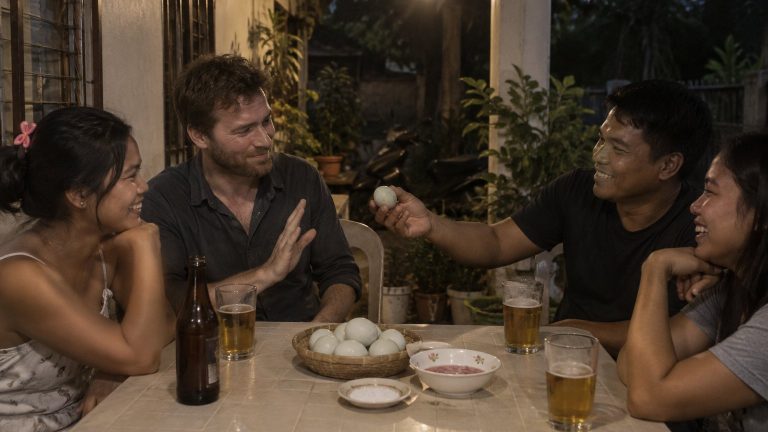 Filipino CultureWhat Is Balut? Eating It With Her Family24 min read
Contents · 14 sections
Pamamanhikan is the visit where a man and his family call on the woman’s family to ask for her hand and start planning the wedding, once she says yes. Your side brings food to share, the families eat together, and someone older often does the asking. It is a custom, not a legal step, so ask what her family expects.
If you are from the US, the UK or Australia and your Filipina partner says her family expects one, perhaps with your own parents living far away, agree with her before the day who comes from each side, who speaks for you, where it is held, what to bring and whether money will come up.
On 24 October 2026 we read and coded 12 English pages that Google showed on the first page for four searches about pamamanhikan, and counted what each tells a reader. They agree on the shape of the day and split on money, who pays, who speaks and what to do when the groom’s parents cannot come. Families, regions and faiths do it differently, so every answer here ends with the same advice: ask her.
Pamamanhikan meaning in English
In English, pamamanhikan means the formal visit a man’s family pays to the woman’s family to ask for her hand and talk about the wedding. Wiktionary describes it as the traditional Filipino custom of formally proposing a wedding by asking permission of the partner’s family, and lists pamanhikan as another spelling 1. There is no single English word for it. “Engagement visit” or “asking for her hand” come closest, but neither carries the part about two families. In a sentence: “Our families meet for the pamamanhikan next month to talk about the wedding.”
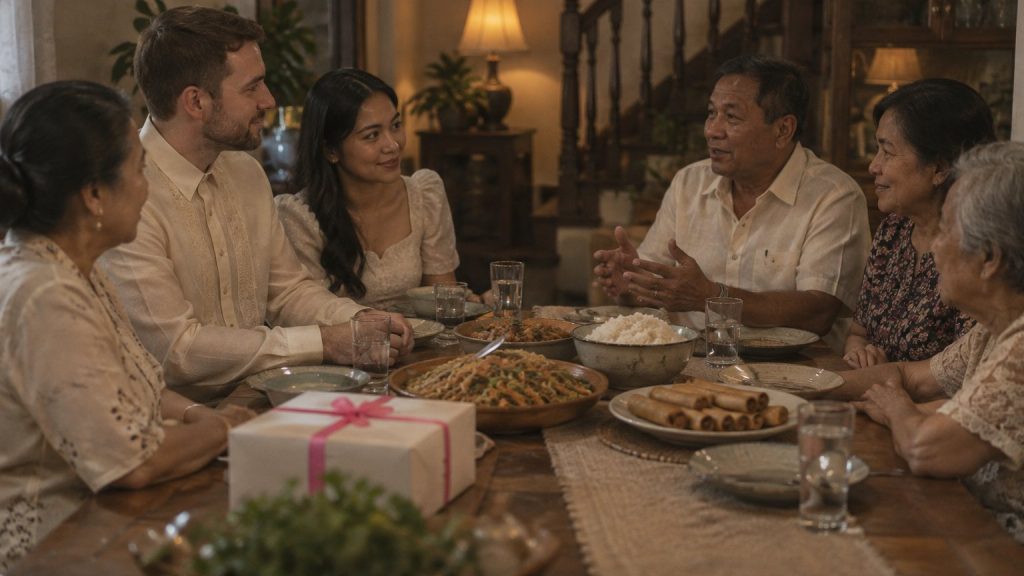
You may read that the word comes from the Tagalog for asking. It does not. The root is panhik, to climb up, as in climbing the stairs into a house: Wiktionary traces it back to Proto-Malayo-Polynesian and cites a Tagalog dictionary from 1613 that glosses it as going up to the house 2. Of the 12 pages we read, 7 say where the word comes from: 5 say climbing up and 2 say asking. The visit is still about asking, so nothing changes on the day. The picture behind the word is his family climbing her family’s stairs.
Pamamanhikan is his family climbing her family’s stairs to ask for her hand and start on the wedding. It comes after the two of you have decided to marry.
What happens at a pamamanhikan
At a pamamanhikan his side arrives with something to share, the families eat together, someone older states why they have come, and the two families start talking about the wedding. Of the 12 pages, 11 say the groom’s side visits to ask for her hand or her parents’ blessing, and all 12 say the families discuss the wedding itself: the date, the venue, the guests