
Filipino superstitions from the guest's chair, for a man meeting his partner's family: the house rules, a new home, the New Year, weddings, pregnancy, babies and gifts, what each asks of you, and what our count of 7 ranking pages leaves out.
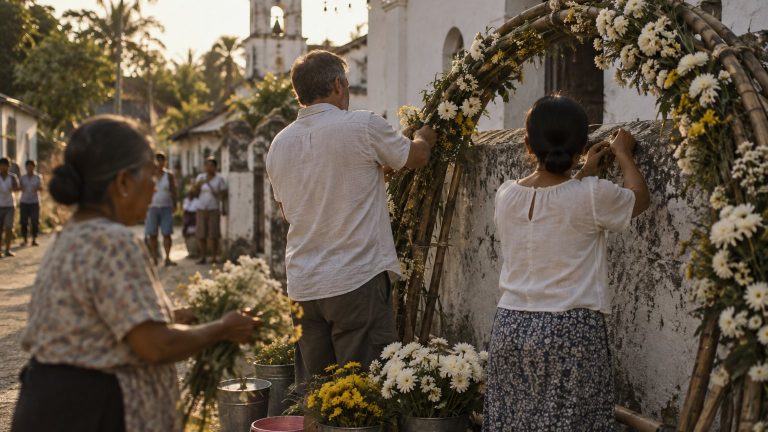 Filipino CultureFlores de Mayo: What Happens at Her Town’s Santacruzan25 min read
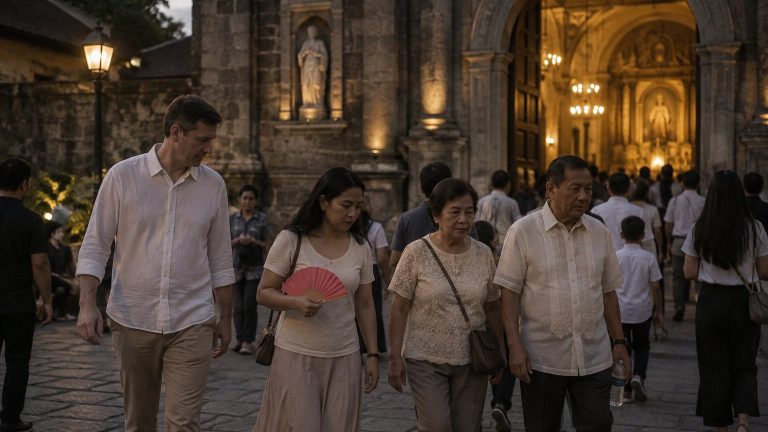 Filipino CultureHoly Week in the Philippines: Traditions With Her Family26 min read
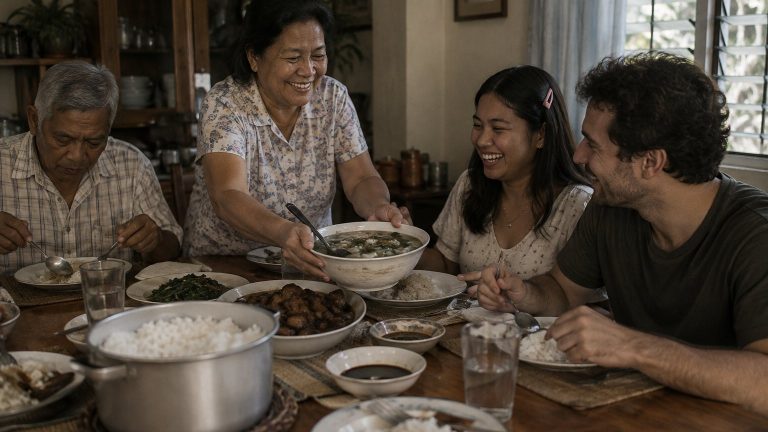 Filipino CultureFilipino Food Traditions: Eating With Her Family27 min read
 Filipino CultureUtang na Loob: The Debt of Gratitude in Her Family25 min read
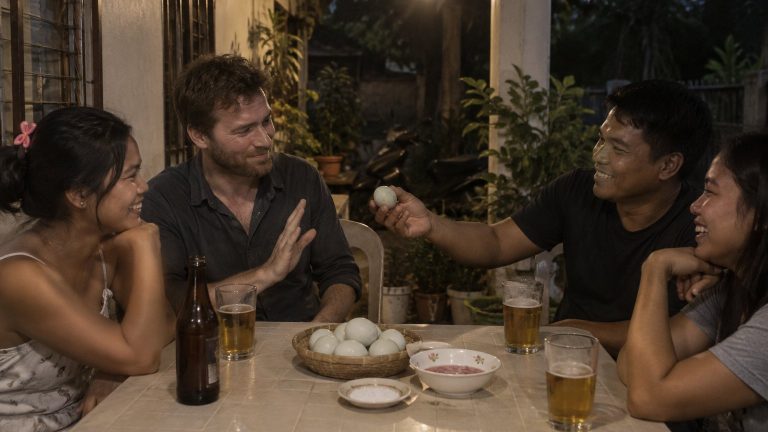 Filipino CultureWhat Is Balut? Eating It With Her Family24 min read
Contents · 13 sections
Filipino superstitions, called pamahiin, are household beliefs such as not sweeping after dark, not opening an umbrella indoors, adding “pwera usog” when you praise a baby, and sukob, the warning against siblings marrying in the same year. Families keep different ones, so ask her which matter in her home. Follow her lead there, and if you slip, say sorry.
The lists we read trace Filipino superstitions and beliefs to several places: older beliefs about spirits, customs that grew up around the Church, Chinese prosperity customs at the New Year, and some shared with the West. Here we go through them room by room and occasion by occasion, from the house to a new home, the New Year, a wedding, a pregnancy, a baby and a gift, and say what each asks of you as her partner. We also read the 7 English pages Google ranks for these searches and counted what they tell a reader. Only 2 say that families differ and 3 tell a visitor what to do, but in the text we saved none uses the words girlfriend, boyfriend or foreigner. Her family knows its own rules, so every piece of advice here ends the same way: ask her. Where a custom touches your wedding date, your own faith or a baby, talk it through with her rather than just going along.
What are Filipino superstitions, and where do they come from?
Filipino superstitions are household rules with a reason attached: do not sweep after dark, or you sweep the family’s luck out of the door. The Filipino word is pamahiin. The pages we read trace them to several places at once. Some are older beliefs about unseen beings in nature, which is why people say “tabi-tabi po”, glossed as “excuse me” or “please move aside”, when they pass an anthill or an old tree 1 2. Some sit beside Catholic practice: a priest blessing a new house with holy water is a Church rite, not a superstition, but families often keep folk customs around it 3. Some are linked to Chinese-Filipino communities, like the round fruits on the New Year table 2, and some are the same ones your own grandmother had, like the umbrella opened indoors.