
Filipino family culture, for a man dating a Filipina, usually means close ties, parents who are consulted on big decisions, respect for elders, and grown children who look after their parents. Her parents' view of you is likely to count. How much else applies depends on her family: in 2020, about three in ten Philippine households were extended or multifamily.
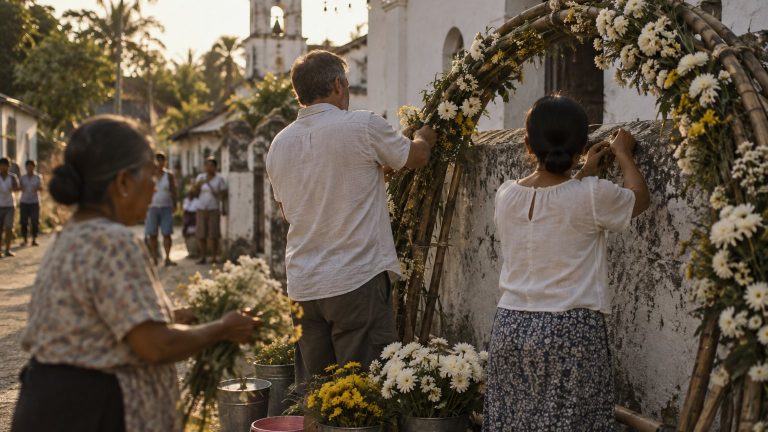 Filipino CultureFlores de Mayo: What Happens at Her Town’s Santacruzan25 min read
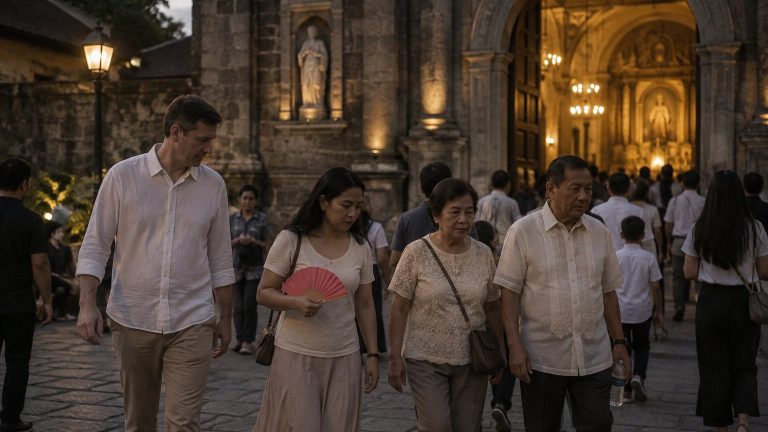 Filipino CultureHoly Week in the Philippines: Traditions With Her Family26 min read
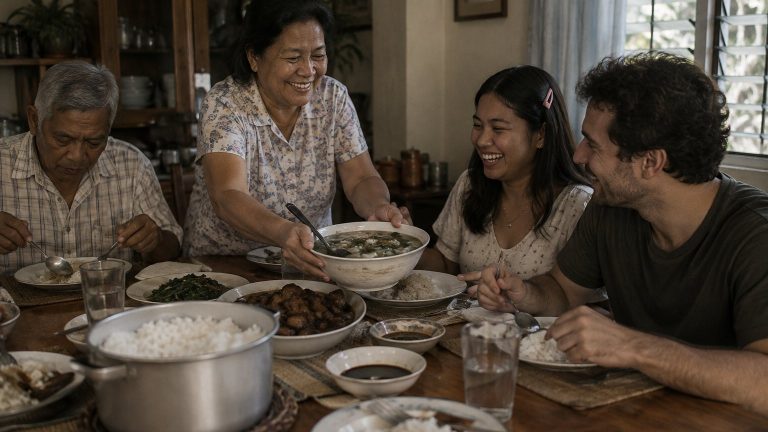 Filipino CultureFilipino Food Traditions: Eating With Her Family27 min read
 Filipino CultureUtang na Loob: The Debt of Gratitude in Her Family25 min read
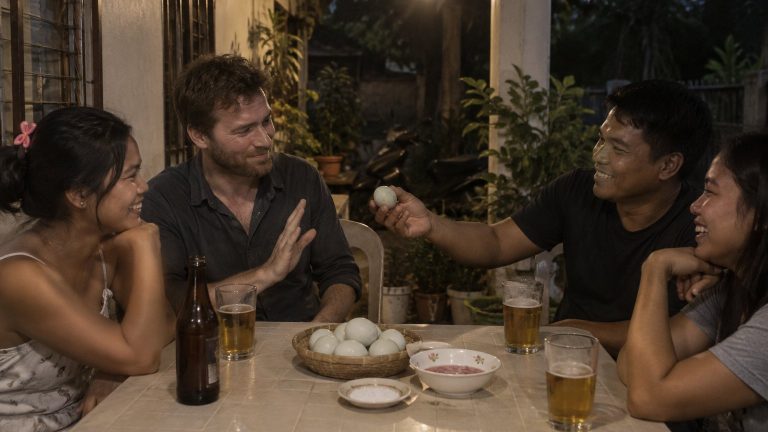 Filipino CultureWhat Is Balut? Eating It With Her Family24 min read
Contents · 9 sections
Filipino family culture and values: what you walk into as her partner
Her family may hear about you early, ask about you and have a view. If she waits a while to introduce you, that alone isn’t a warning sign; ask her when and how she’d like it to happen. The values you meet first are closeness, respect for older relatives and a sense of owing your parents, and none of them is just talk. She may check a big decision with her parents before she makes it, and their opinion of you may matter to her more than you’re used to at home. Our page on what Filipina women are like makes the same point from her side, and the wider dating customs are on Filipina dating culture.
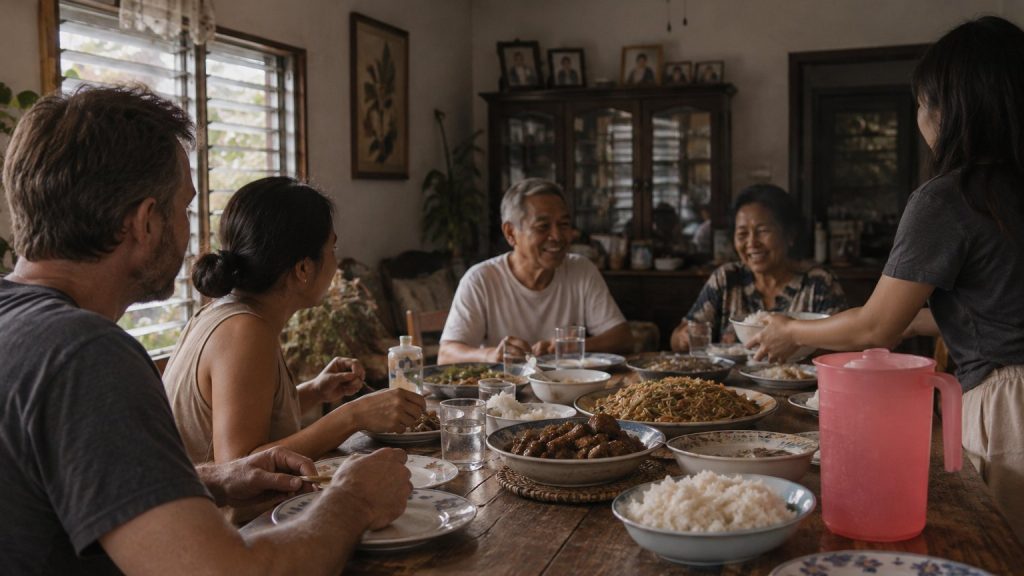
The sense of owing has a name you’ll hear: utang na loob, a debt of gratitude that grown children feel above all toward the parents who raised them. It’s one reason caring for her parents later in life may feel to her like a duty, not a favour, though only she can tell you what she feels she owes.
To see what you’d read elsewhere, we read what a man finds when he searches for Filipino family culture: the pages Google showed in the US on 22 October 2026, the pages around them, and Google’s AI answer above the results, 9 in all. We noted what each one claims. 6 of the 9 say several generations or extended family often share a home. Five call it common or say it happens often, and one calls extended households the norm. None of the 9 gives a figure, and only 2 say it differs by city or family.